The forge came first
Copper that changes, pewter you can feel, and steel that has to still be there in thirty winters.
Still made the same way
FORJD began at a fire in the corner of a shop, and the trees are what it grew into. We still make them the same way, which is slowly, and with the fire on.
You can see where the hands were
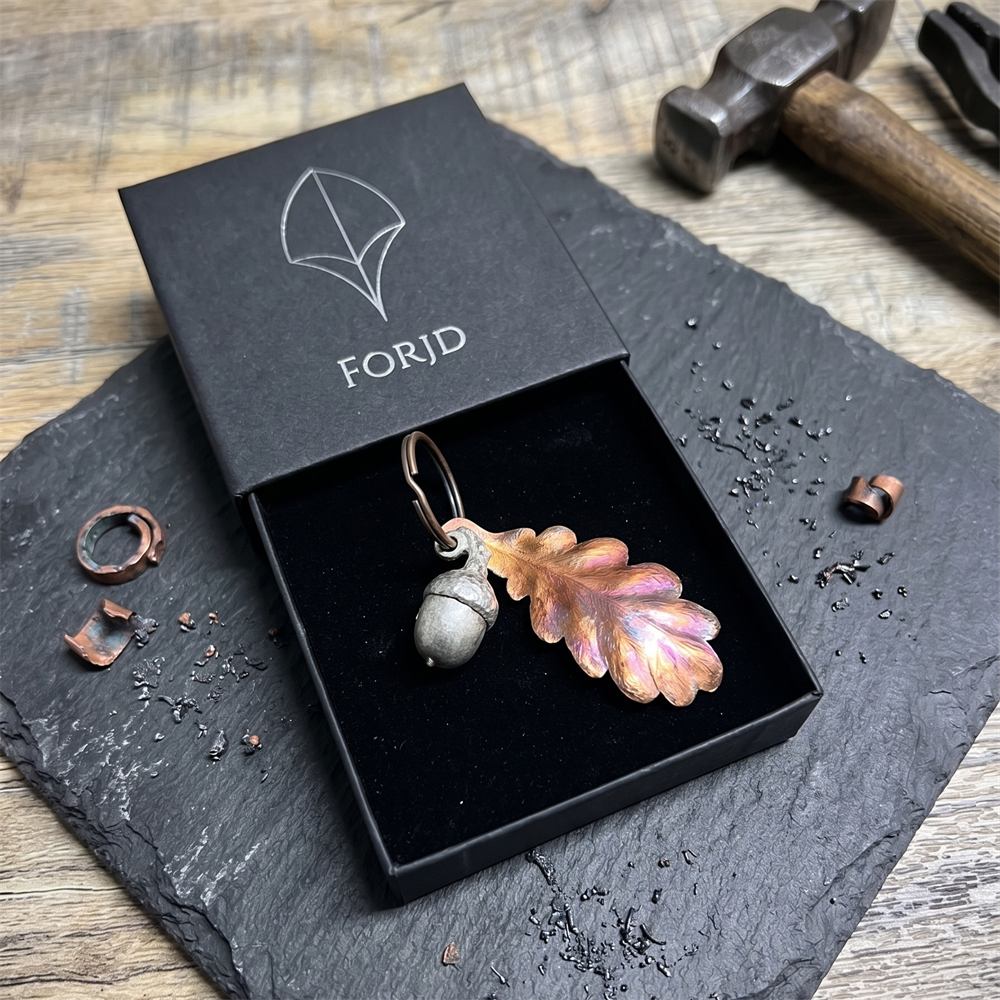
A piece is drawn, cut, hammered and finished by somebody who was taught how, and we leave the marks of that where you can see them. They are not a flaw we failed to polish out. They are the reason it is worth having.
No two are identical, and they are not meant to be. A leaf made this morning and one made next spring will hang on the same tree and be recognisably off the same hands. That is what somebody is holding when they open the box.
Where a shape has to be exact it is exact, so a name added in five years still fits a tree bought today. Precision where it matters, and a human everywhere else.
It only moves while it is hot
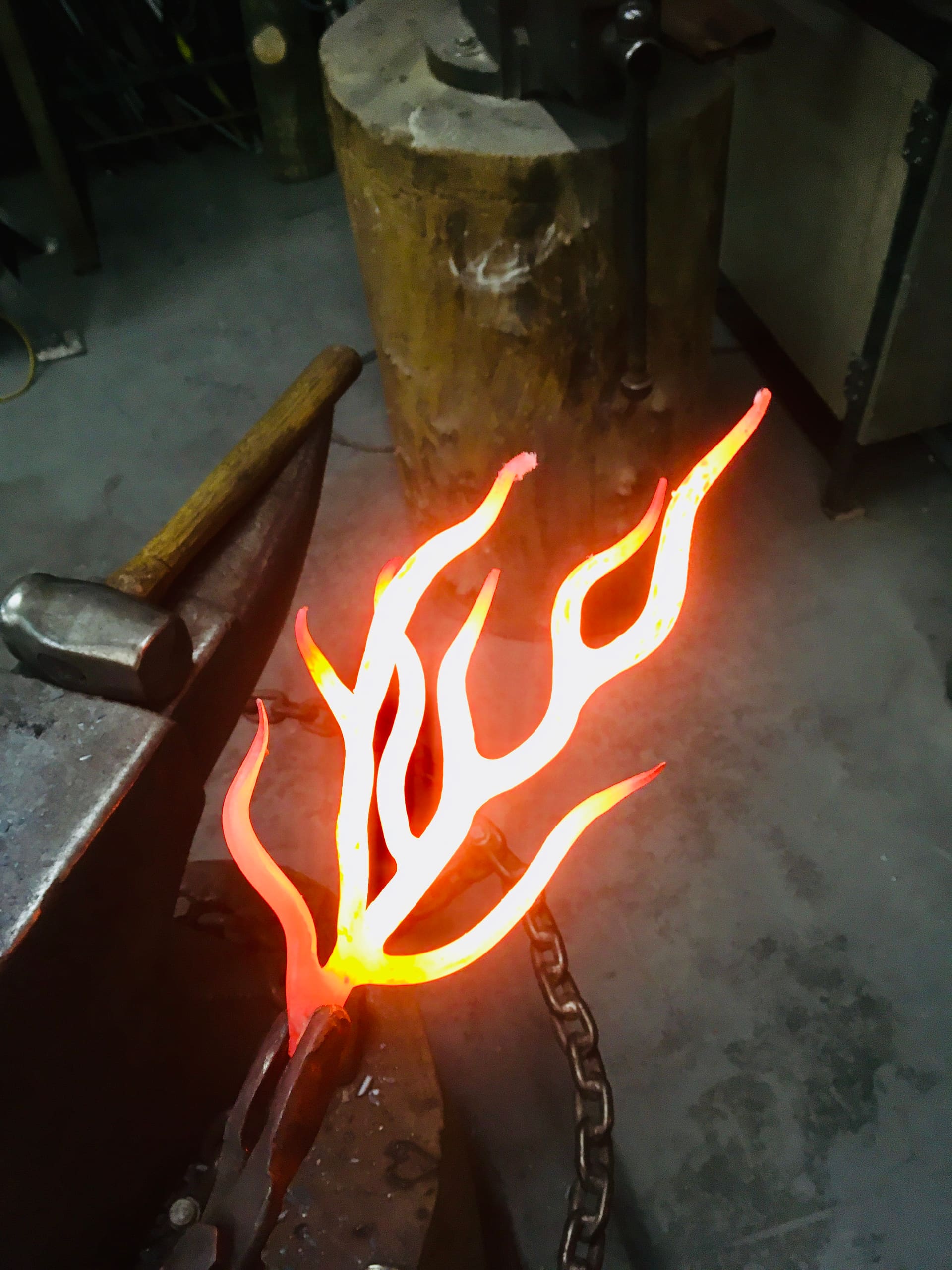
Steel gives while it is hot and then it stops giving, so everything that happens to a piece happens in the moments after it comes out of the fire. Then it goes back in and waits.
There is no quick version of this. A branch is drawn out under the hammer a bit at a time until it is the length it needs to be, and the next one is drawn out the same way.
That is where the differences come from. Not from anybody trying to make them different.
Hundreds of them, and not one the same as the next.
Metal that behaves like a living thing
Every material here was chosen for what it does over the years.
Copper, because it changes
It arrives bright and it darkens slowly, year after year. So a leaf hung ten years ago does not look like one hung last week, and a tree ends up keeping a record of itself without anybody writing it down. Nothing else does that.
Pewter, because you can feel it
Weight in the hand. Cast and finished by hand, soft grey rather than shiny. A keyring should feel like something when you find it in your pocket six months later.
Stainless, because it has to still be there
Marine grade, for anything standing outside. Rain, salt, thirty winters. The people who come back to it in 2056 should find it exactly where they left it.
And the wood
Bases are timber, cut and finished here. Every one is a different piece of wood and looks like it, which is rather the point.
Somebody has to be taught, or it stops
These are trades learned at the fire, next to somebody who already knows. They cannot be read out of a book. If nobody is taught, they end with whoever is holding the hammer.
We are a team
The work leaves here because several people made it, and more of them are being trained than are fully trained.
More than one trade
Forging, casting, cutting, finishing, and the drawing that comes before any of it. Somebody has to be taught every one of them, not just the popular one.
Taught at the fire
An apprentice starts on the real work, on real pieces, from the first week. Nothing here is made by a machine while somebody watches.
It stays in Lancashire
The skills came from here and we would rather they did not leave. Every person trained is one more who can teach the next.
The work outlives us
A tree stands for decades and keeps taking leaves. Somebody has to still be here to make them, long after the day it was delivered.
If you can draw it, we can usually forge it
Most of what we have made started as somebody describing a thing that did not exist yet. Tell us what you have in mind and we will tell you honestly whether it can be made, and how long it would take.
Ask about a commission