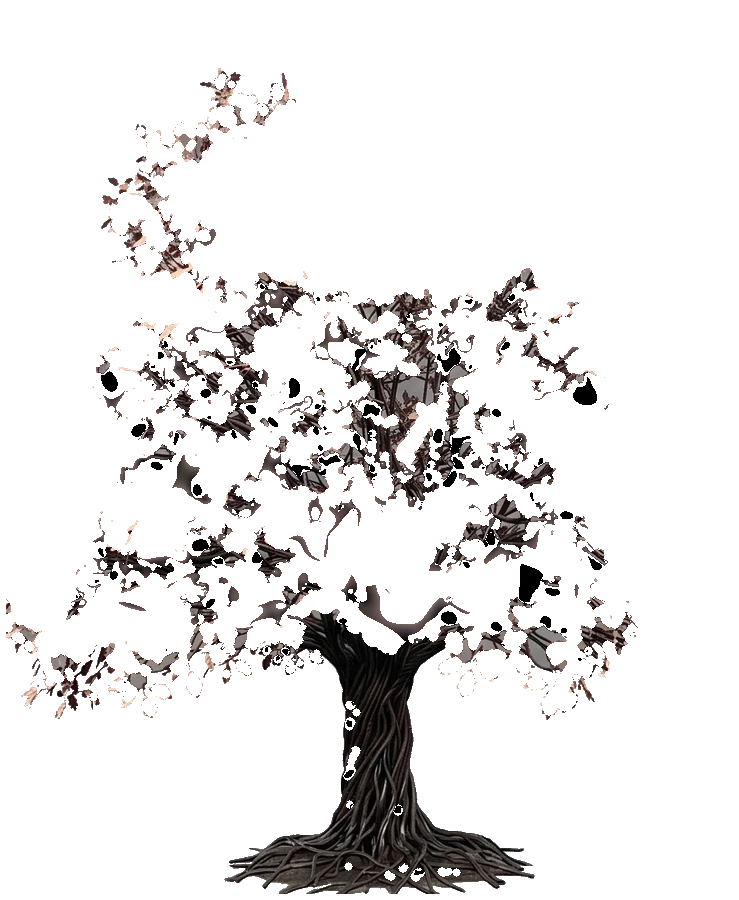
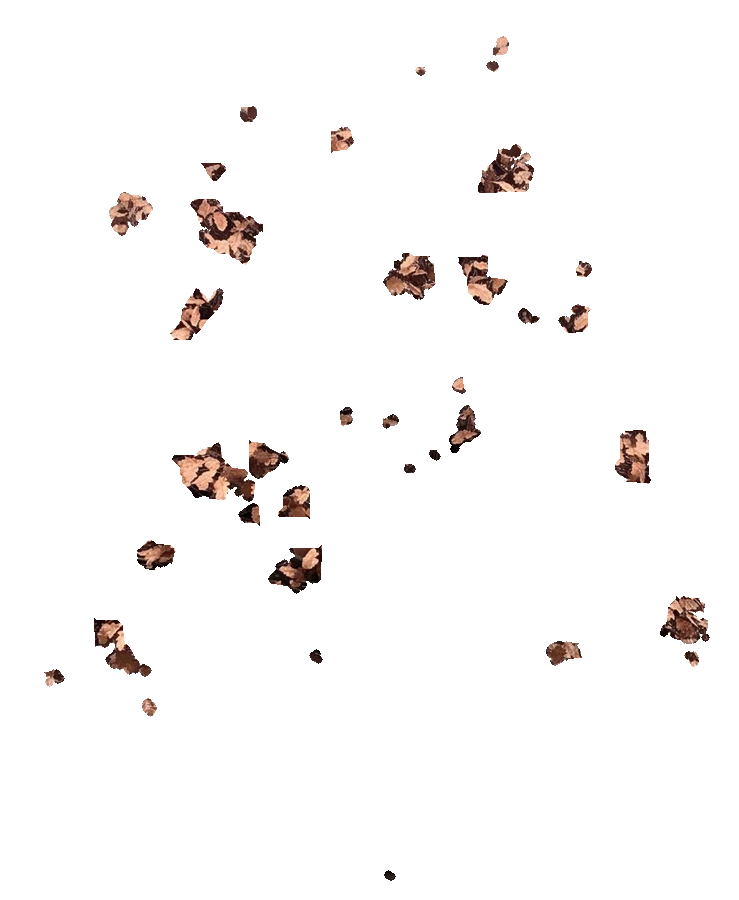
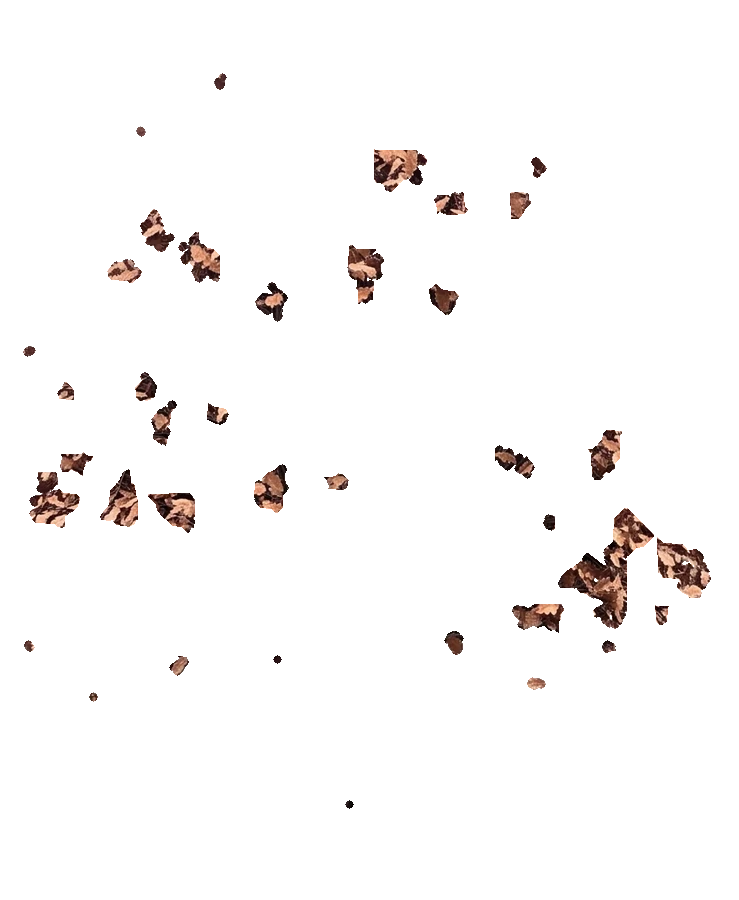
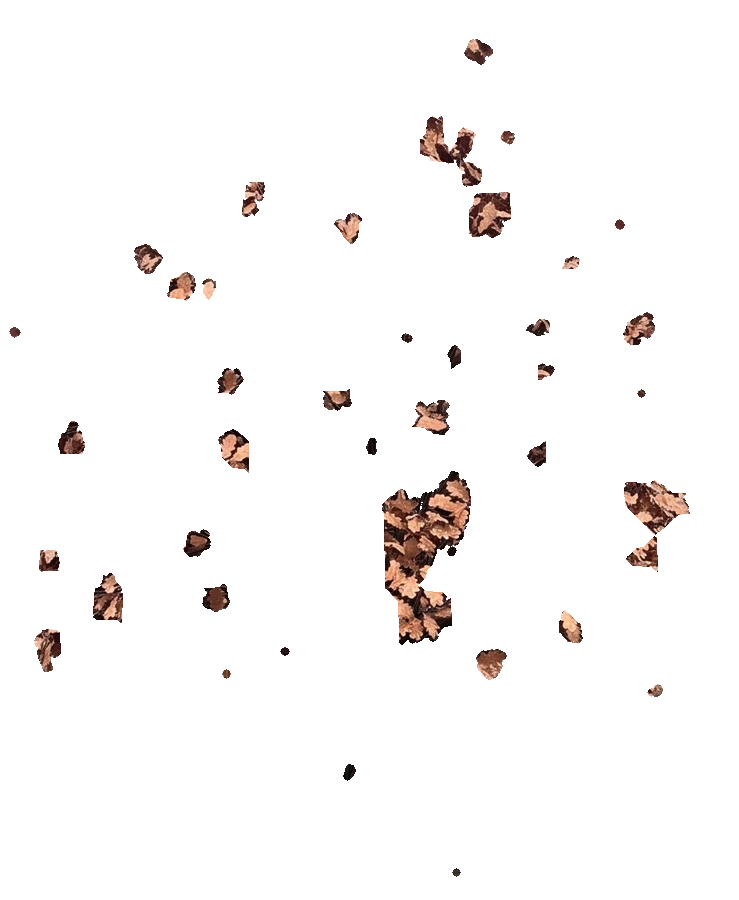
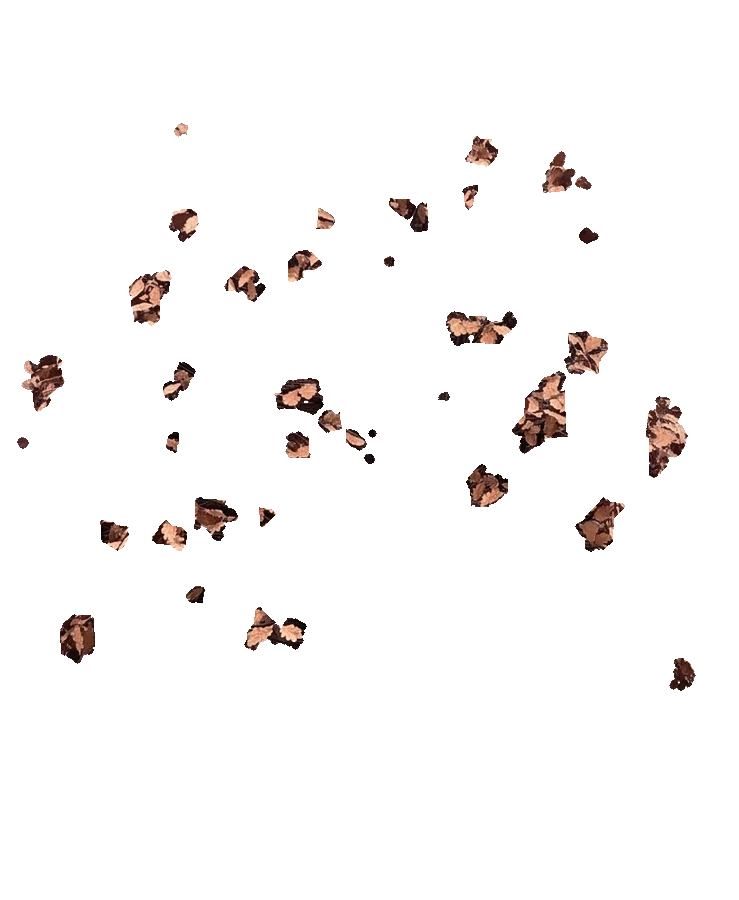
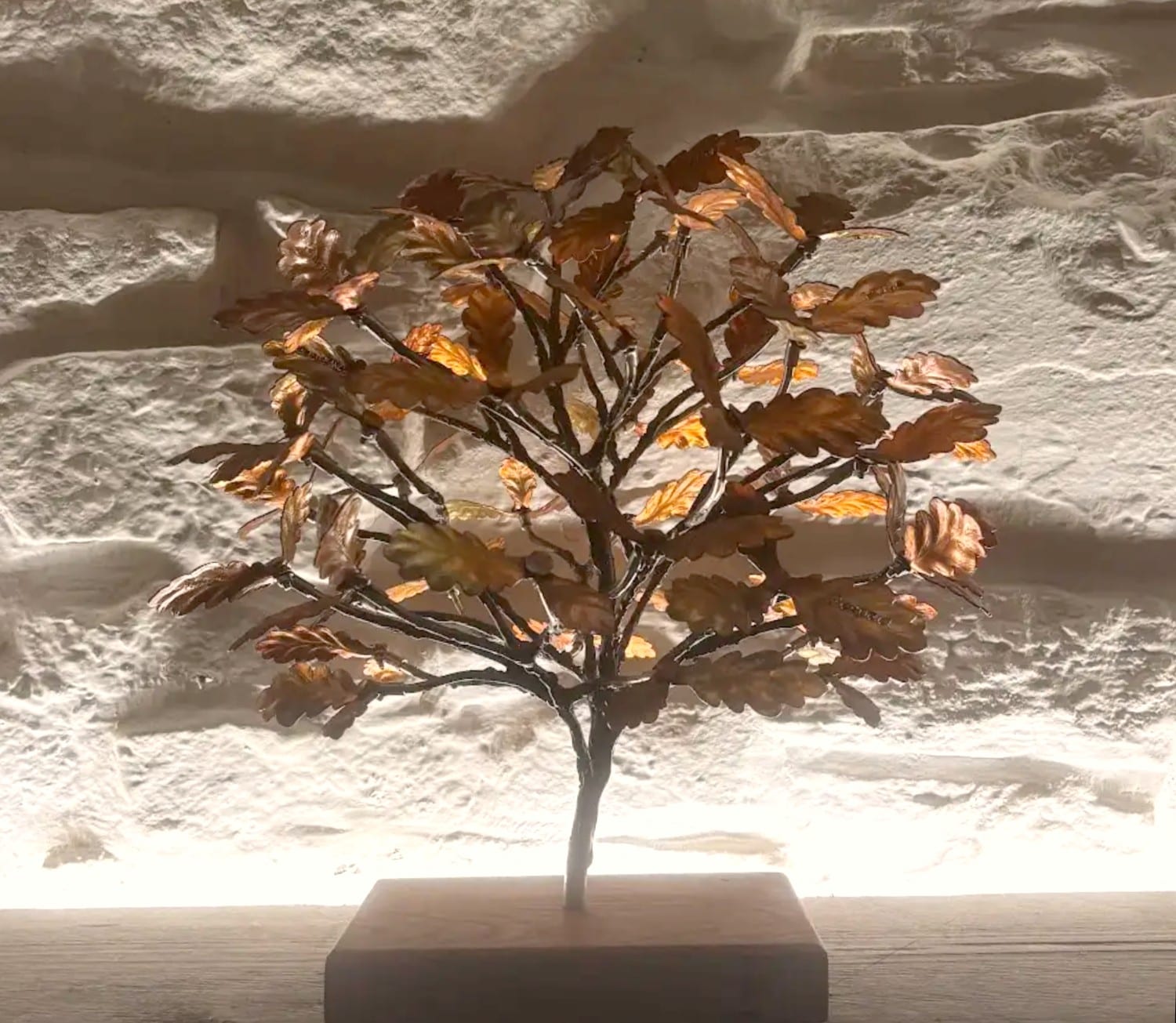
 The FORJD master tree: a forged steel oak carrying copper leaves.
The tree that never sheds its leaves
An oak, two metres eighty-five, forged by hand in Lancashire. Every leaf on it is somebody's name, and not one of them ever falls.
Why there is a tree at all
We follow the craft. We teach the craft. And through the teaching we make the things that help people when they need them. A tree of life is what that looks like once it is finished.
A tree of life stands in a hospice garden or a hospital courtyard, and it gives grief somewhere to go.
Somebody who was taught at our fire made every leaf on it. Somebody they go on to teach will make the leaves added in thirty years, because a tree of life is never finished — a leaf goes on it every time a family asks for one, and that is the point of the thing rather than a detail of it.
Which is why the shape had to be right before anything else was decided. It is not an ornament and it is not a sign. It is a place, and it has to hold up as one for longer than any of us.
Why it is an oak
Every leaf we make is an oak leaf, and every tree we make is an oak. That was settled a long time before FORJD was.
Long before there were churches in this country, the druids held their ceremonies in oak groves — their name may even mean oak man. In 1651 a king hid in an oak to save his life, and when he got his throne back he gave the tree its own day. Eight of the Navy's ships have been called Royal Oak since, and the ships themselves were built of it.
Ask anybody in this country to draw a tree and they draw an oak. It is the one we plant for a hundred years, the one we stand under, and the one we remember by.
One oak, standing, is home to more kinds of life than any other tree here: more than two thousand three hundred of them. Kings wore its leaves as a crown.
Where the shape came from
Not a tree. A particular kind of oak, and there is a reason it is that one.
An oak in a wood goes up
Crowded on every side, it spends its life climbing for the light. Tall, straight, narrow, and the first branch thirty feet off the ground. Nobody sits under it, because there is nothing to sit under.
An oak in a field spreads
Nothing crowding it, so it goes out instead of up — as wide as it is tall, the lowest branches low enough to duck beneath. That is the tree in the middle of the field that everybody knows and nobody planted.
We build the one in the field
Because it is the one people walk under, and because a canopy that goes out instead of up has room for a thousand names without ever looking crowded. The shape is not decoration. It is capacity.
The frame is the drawing
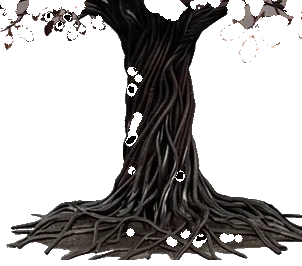
Strip the leaves off and what is left is the whole design. A trunk that is not one bar but many, drawn out and wound together the way a real trunk is a lot of years twisted round each other. Roots that come out of the foot of it and spread across the ground rather than vanishing into a plate.
Branches that fork, and fork again, and get thinner every time they do — because that is what a branch does, and the eye knows straight away when it has not.
It is drawn from photographs of real branches. Not from a picture of a tree, and not from anybody's idea of one.
The oldest drawing of it
It starts off as the seed of life, and it rolls into the flower of life, and then it is into the tree of life.
FORJD
Every culture that ever looked hard at a tree arrived at the same drawing on its own, and none of them were copying each other. We did not invent this shape. We are only the ones making it in metal.
How the height was arrived at
Not picked off a drawing. Drawn at true size, with people stood next to it, and moved until it was right.
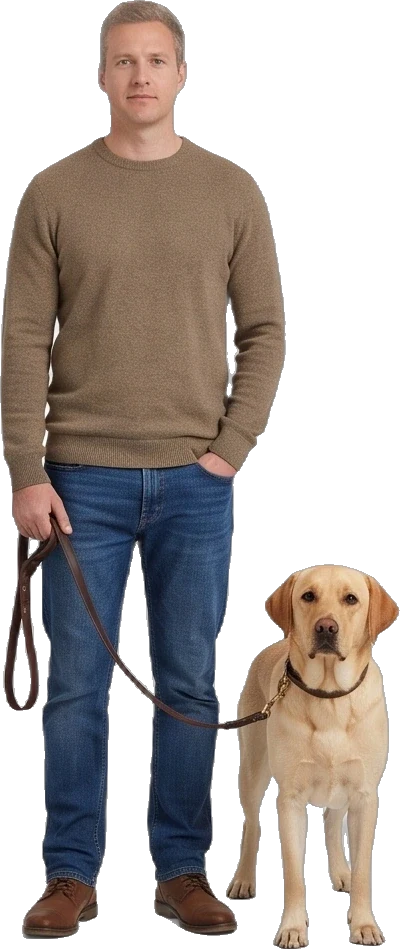
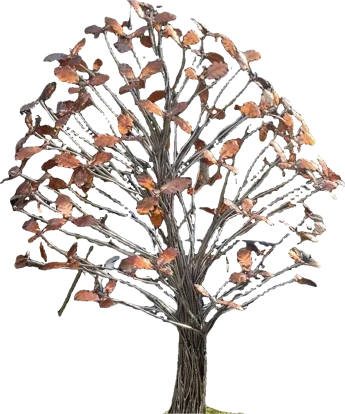
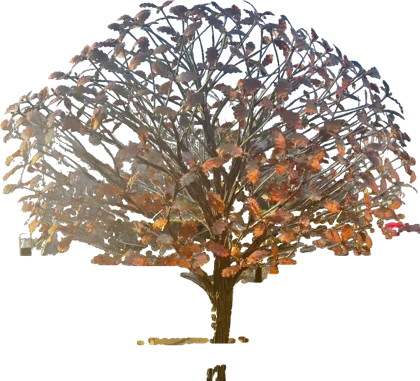
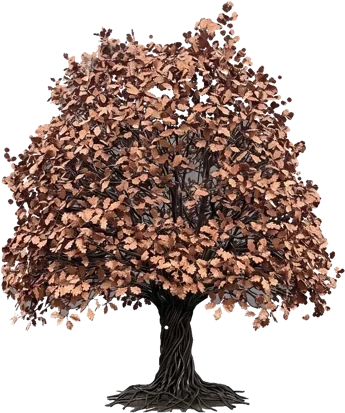
Drawn to true scale. The man is 1.80 m, and everything on the row is measured against him. Swipe the row to reach the master.
Two of those are already standing. Willowbrook has been out in its grounds since July 2025 at 1.80 m, and the tree at Havens in Essex is 2.10 m. The master is 2.85 m, and it is bigger than either of them on purpose.
At 1.80 a tree reads as a piece in a garden. At 2.85 you walk under it, and the canopy is over your head rather than in front of your face — which changes what the thing is, from something you look at into somewhere you stand. That is the whole argument for the height, and it is why it was settled by putting figures next to it at full size instead of by choosing a number that sounded about right.
It was drawn at three times print size, put on photo paper, and signed off on the paper. Every drawing, every survey and every proposal we make from here is measured against that sheet.
A thousand names, and room for more
Drag the handle, and watch the same tree fill up.
One thousand to twelve hundred
Named places on a tree of this size. That is not a canopy filled to bursting — it is what the shape carries while still looking like a tree.
Fitted blank from day one
The tree does not go up half empty waiting for names. The leaves are on it from the day it is installed, and a name is added to a leaf that is already there.
Lefts and rights
Every batch of leaves is made in two handednesses and hung alternately, so no two sit the same way on the branch. It is the difference between a tree and a pattern.
It is never finished
A leaf goes on every time a family asks for one. Ten years in, the tree is fuller than it was, and that is the only record of it anybody needs.
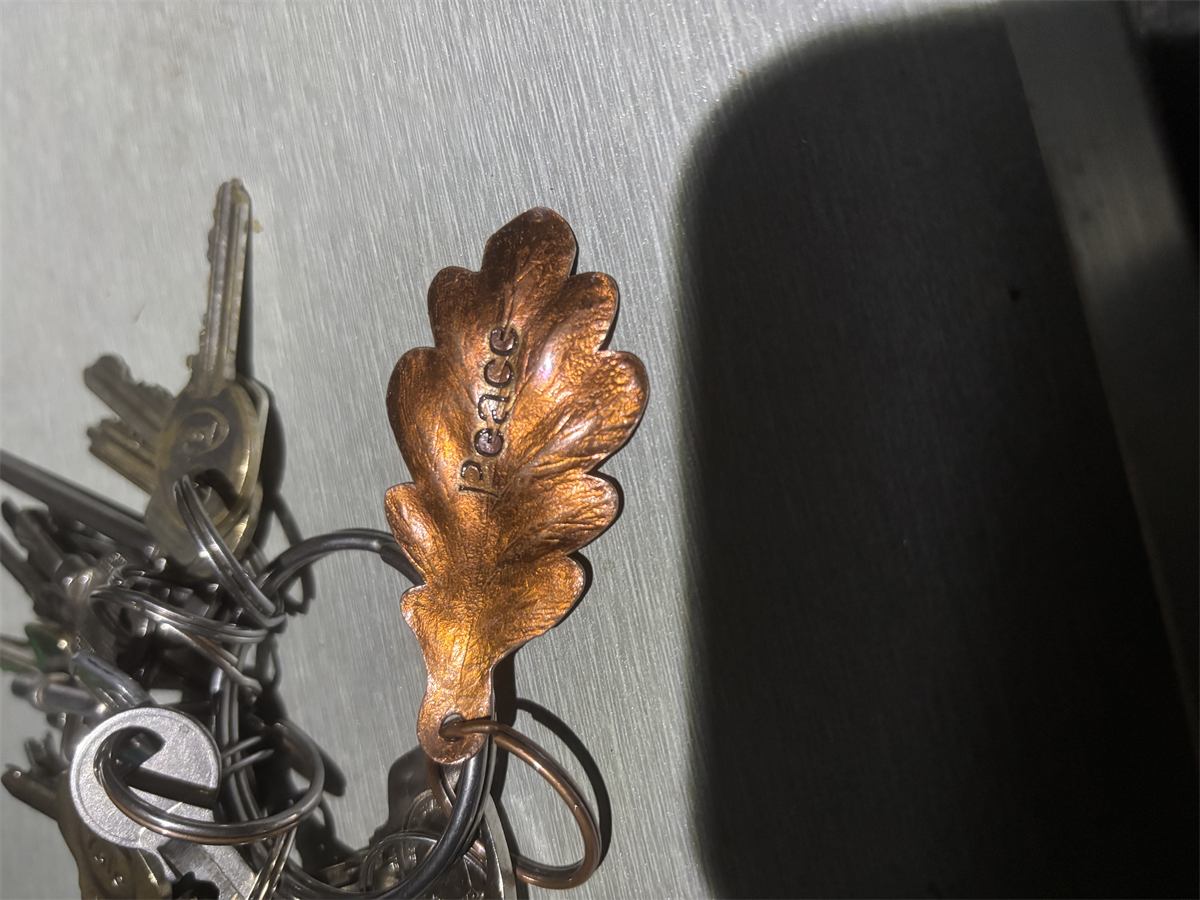
One leaf, one person
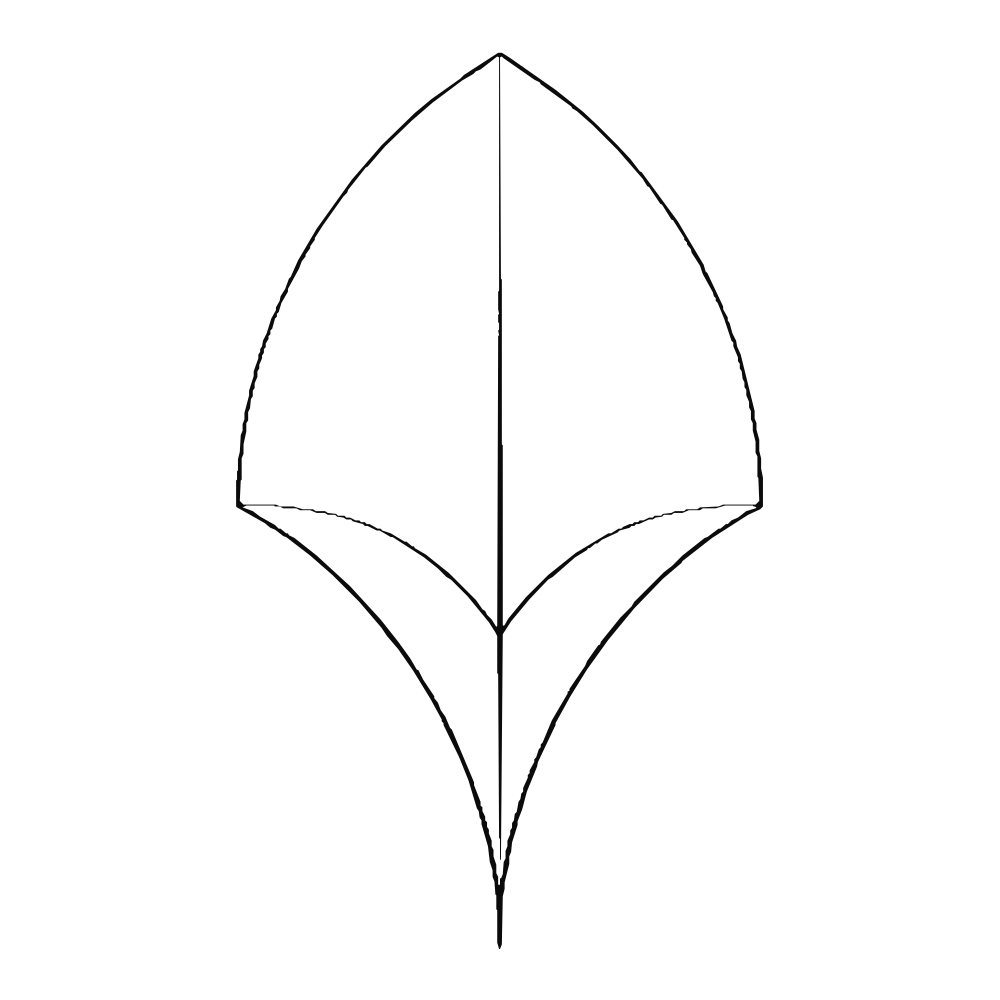
A copper oak leaf, about the size of your hand. The name is not printed on it, etched on it or painted on it. The letters are a shape cut right through the metal, so what you read is the light coming through the gap.
There is nothing on the surface to fade, rub off or wash away, because the nameis the metal. That is the reason it is done the hard way.
Each one is cut, then worked by hand — hammered, dished, given its curl and its colour in the fire. Two made a season apart will not be identical and are not meant to be. They will be recognisably off the same hands.
Some families want something to keep in a pocket as well as a leaf on the tree, so we cast acorns in pewter, and a leaf to go with them.
How one is actually made
Slowly, and with the fire on.
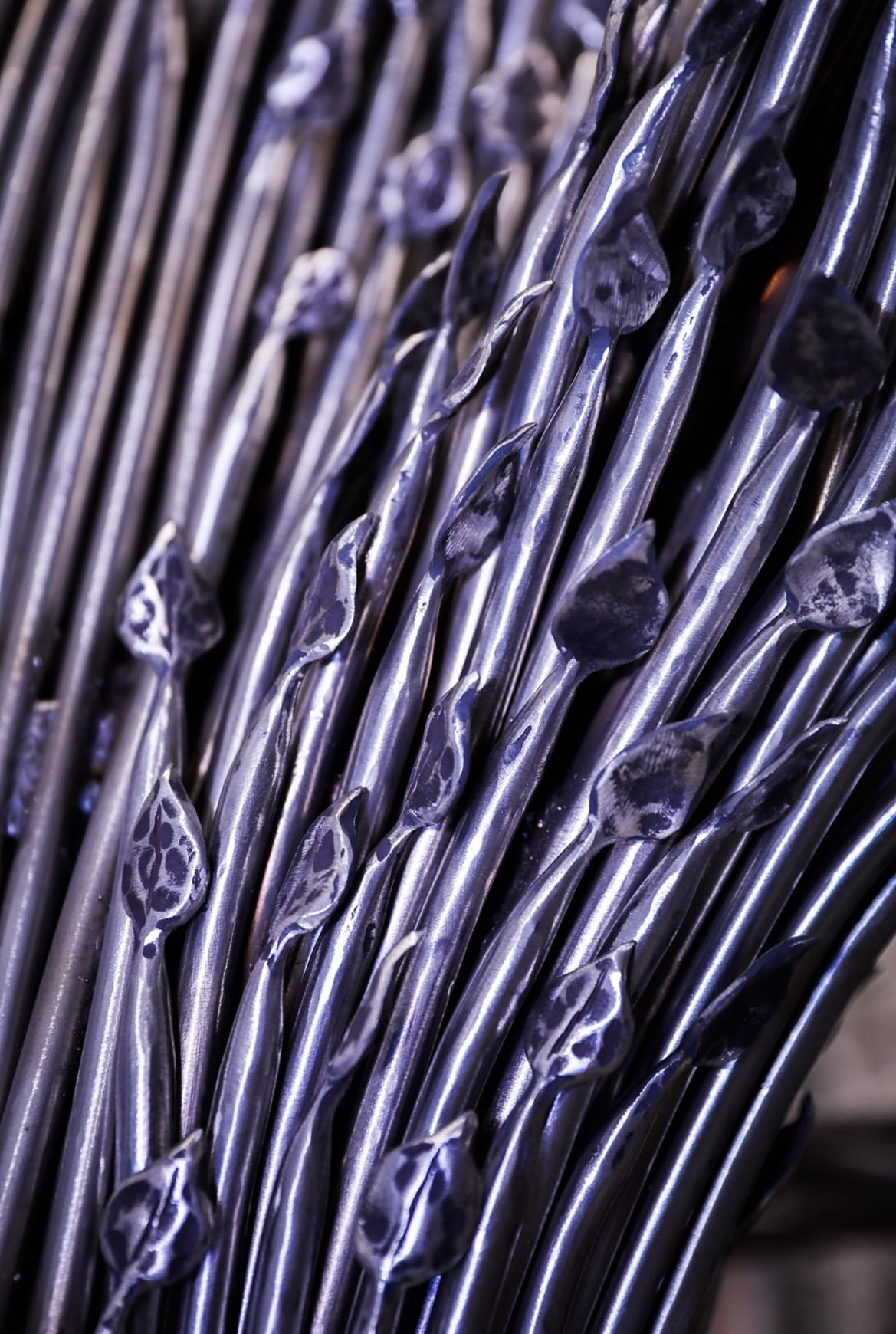
The frame · 316L
Marine grade stainless, not ordinary stainless. 316L is the grade specified for coastal and swimming-pool work, where salt air pits and stains the cheaper ones.
The L matters at the weld. Ordinary 316 can weaken along a weld line and rust there first, and on a welded tree that is exactly where a failure would show. It is the reason we pay for the better grade.
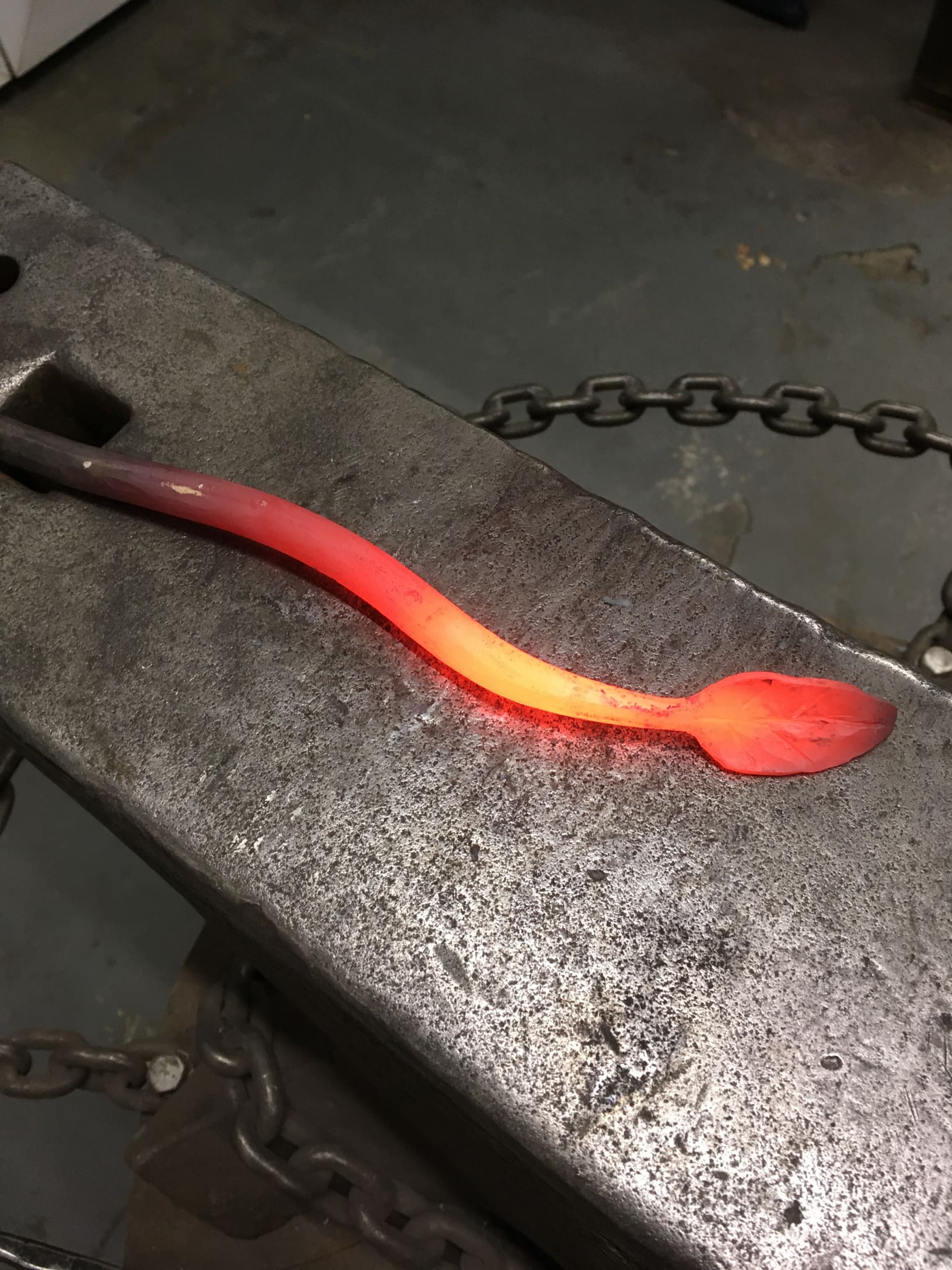
The leaves · copper
Copper sheet, with a stainless tab at the stem so a leaf can be fixed to a branch without two metals arguing with each other where they meet.
Every leaf is beaten, shaped and heated for its colour, then sealed with a coating that guards against oxidisation, staining and fingerprints. Done here, by us, and renewable whenever you want it renewed.
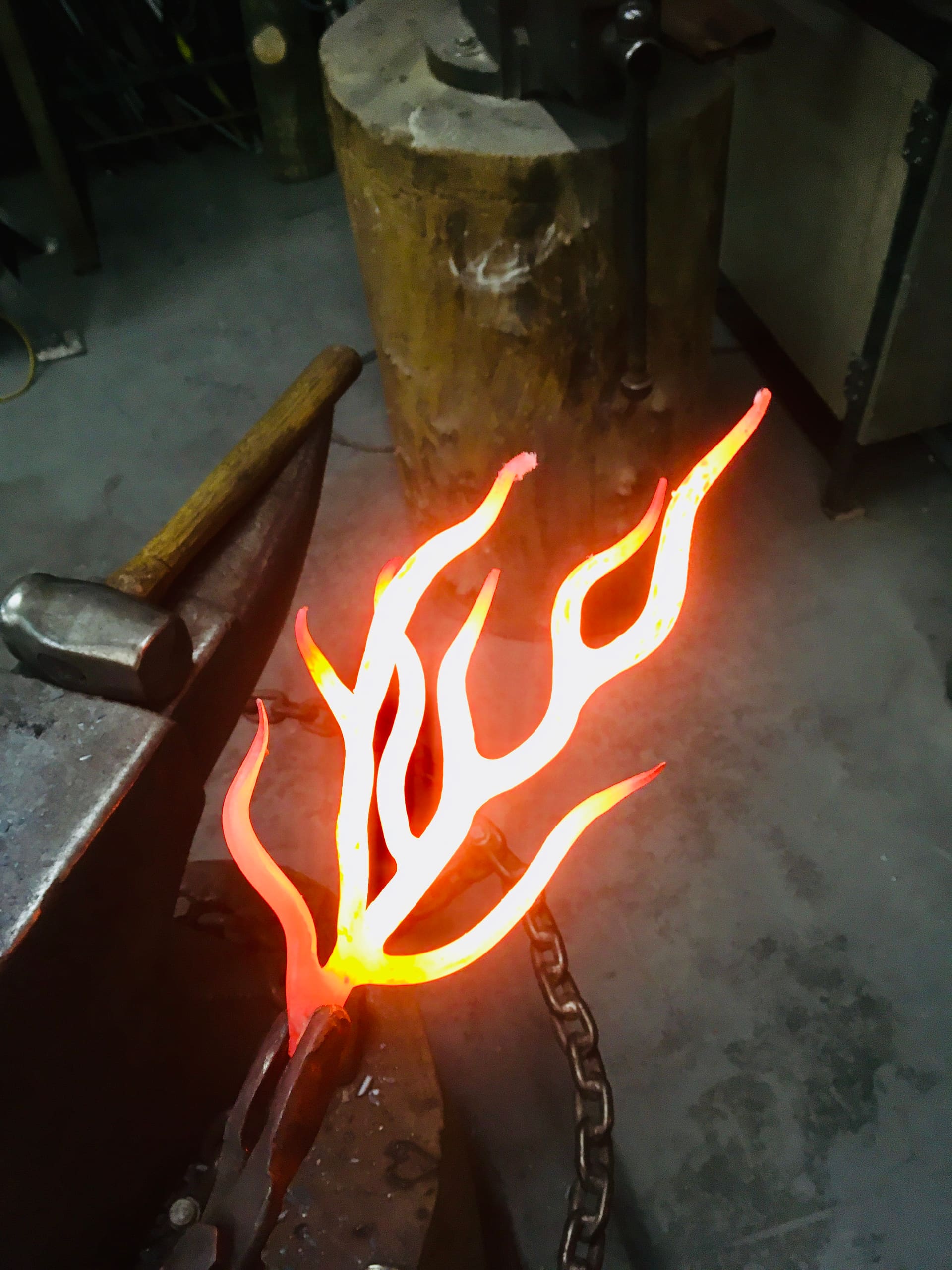
The trunk · by hand
Round bar between eight and twelve millimetres, drawn out and worked together so the trunk is many strands rather than one thick post. That is why it reads as bark from across a courtyard.
You can see where the hands were, and we leave the marks of it where you can see them. They are not a flaw we failed to polish out.
And in the order it actually happens
- The feet are castConcrete, made here. A tree this size does not stand up because of the steel — it stands up because of what is underneath it.
- The trunk is madeStrand by strand, drawn out and wound together, then welded. Everything else hangs off getting this bit right.
- The branch locks go onEvery branch has its own fixing, so a tree travels in pieces and goes together on site rather than arriving on a low-loader in one lump.
- The branches, then the twigsForking and thinning outward until the canopy has its shape, which is the point where you can finally tell whether the drawing was right.
- The leavesA thousand of them, lefts and rights alternating, each one beaten, coloured and coated before it goes anywhere near the tree.
- Photographed, then it goesEvery tree is photographed in the workshop before it leaves, so we know exactly what we made and exactly what went where.
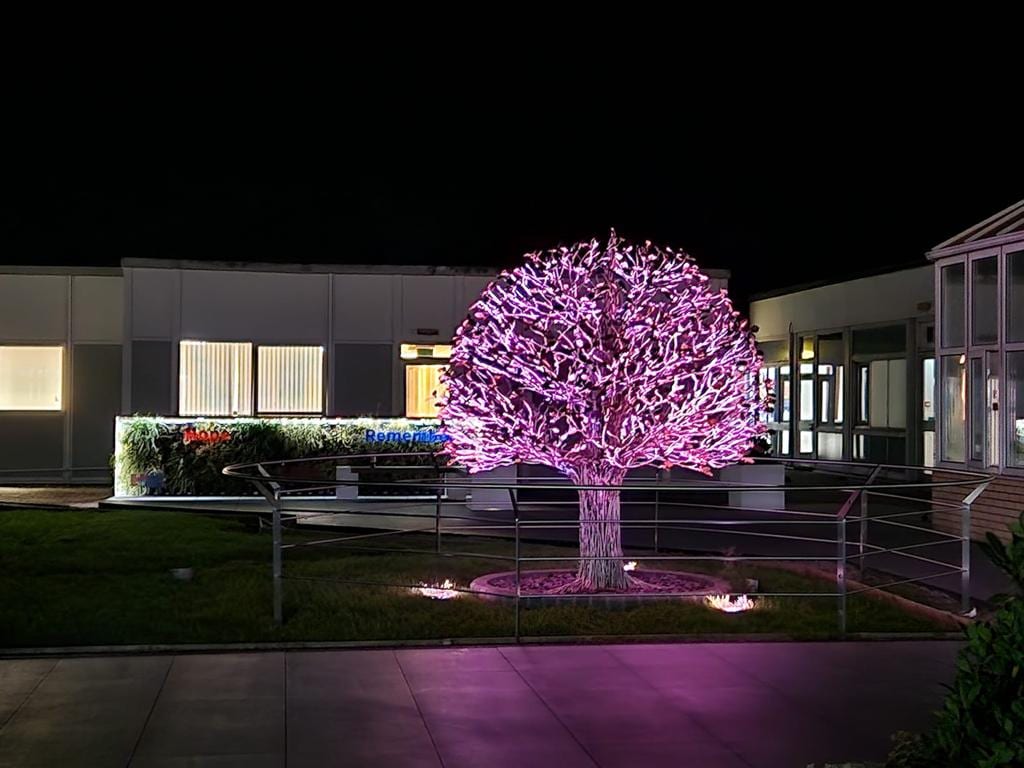
It is the shape that carries at night
We normally set three uplighters into the ground at the foot of a tree. Branches thrown up a wall, and the leaves picking the light up from underneath — which is the reason the canopy is drawn open rather than solid.
Charters Garden, Royal Preston Hospital.
A memorial is a promise about time
A family reads a name and assumes it will still be there in twenty years. So here is plainly what changes, and what we do about it.
Copper is a living surface
It will not stay the colour it arrives. Over years it softens, deepens and settles into its own colour. That is not damage — it is the tree ageing, and it adds to it, the same way the trees outside the window are not the colour they were in spring.
Nothing outdoors lasts forever
And we will not pretend otherwise. What we will say is that the frame is the grade specified for salt air, and the name is a hole in the metal, and neither of those has anything on it to lose.
There is no upkeep
No polishing rota, no annual treatment, nothing for a grounds team to remember. If anybody ever wants to freshen a leaf: warm water and a soft cloth. That is the whole of it.
We stay on the end of the phone
If a leaf ever needs re-coating, re-fixing or replacing, we do it. This is not a thing we deliver and walk away from.
The ones already standing
Every one of them made in our own workshop, and every one in a hospital or a hospice garden.
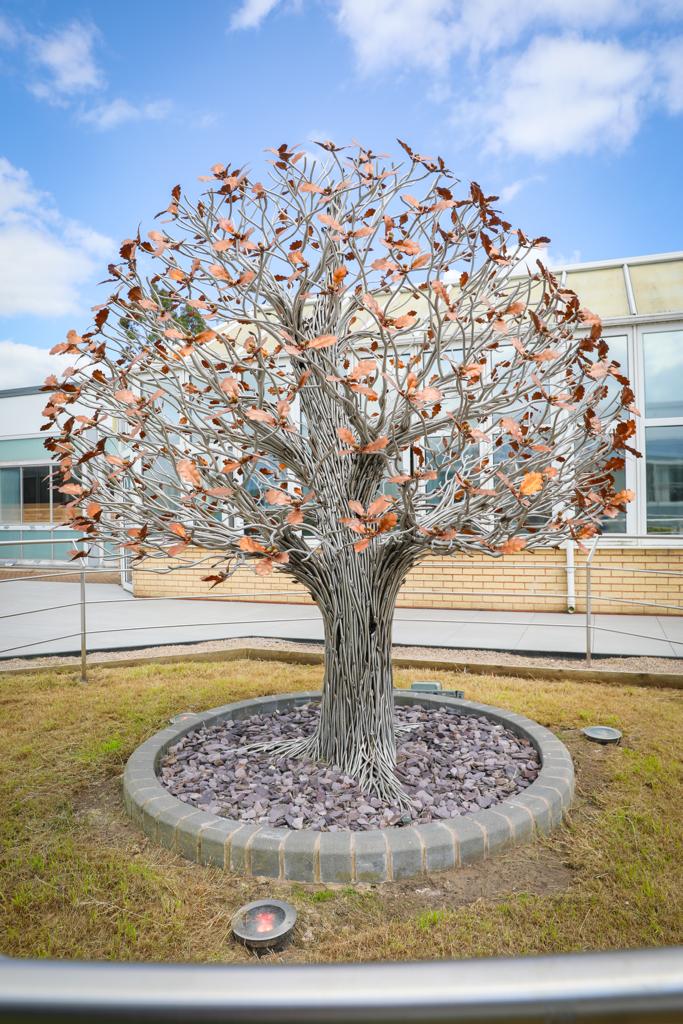
Charters Garden, Royal Preston
The organ donation tree. It stands in a circle of slate with lights set into the ground around it, and people come to it from a very long way off.
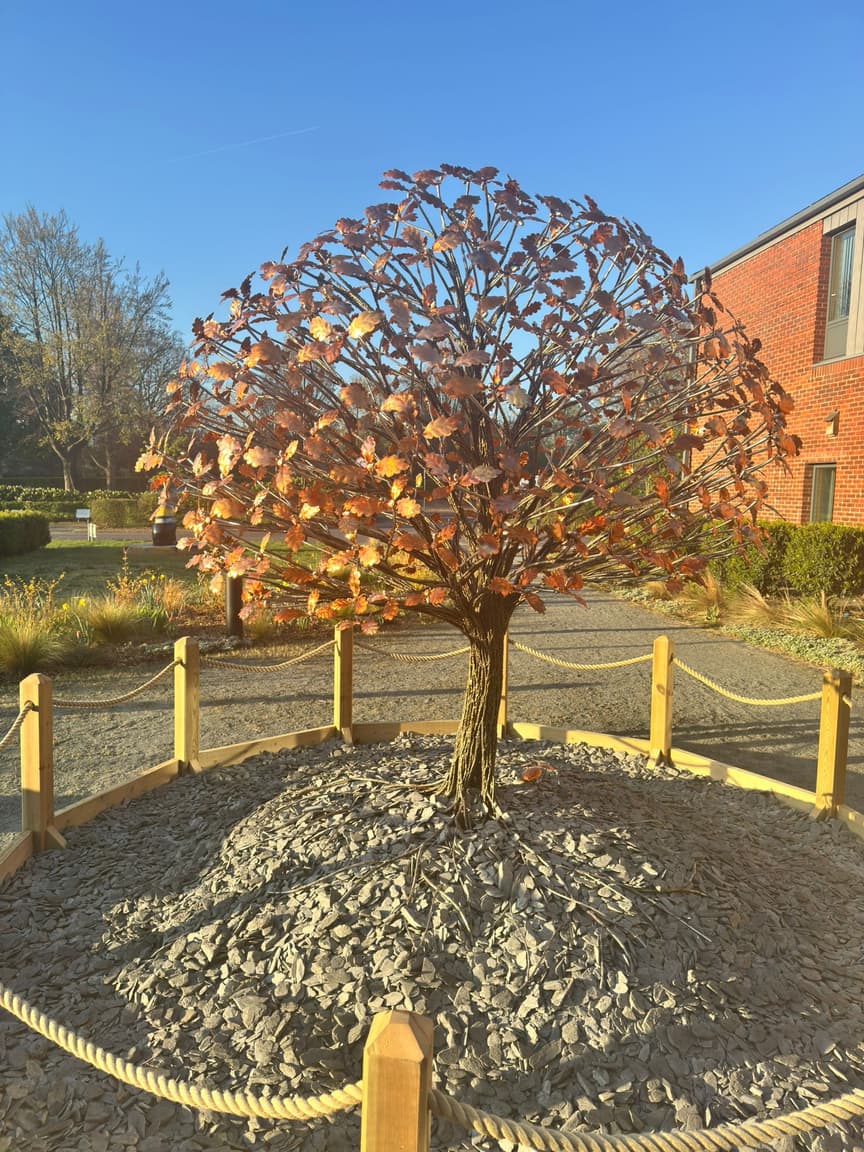
Havens, Essex
2.10 m, set on its own off the path through the grounds, in a circle of slate with a rope fence round it.
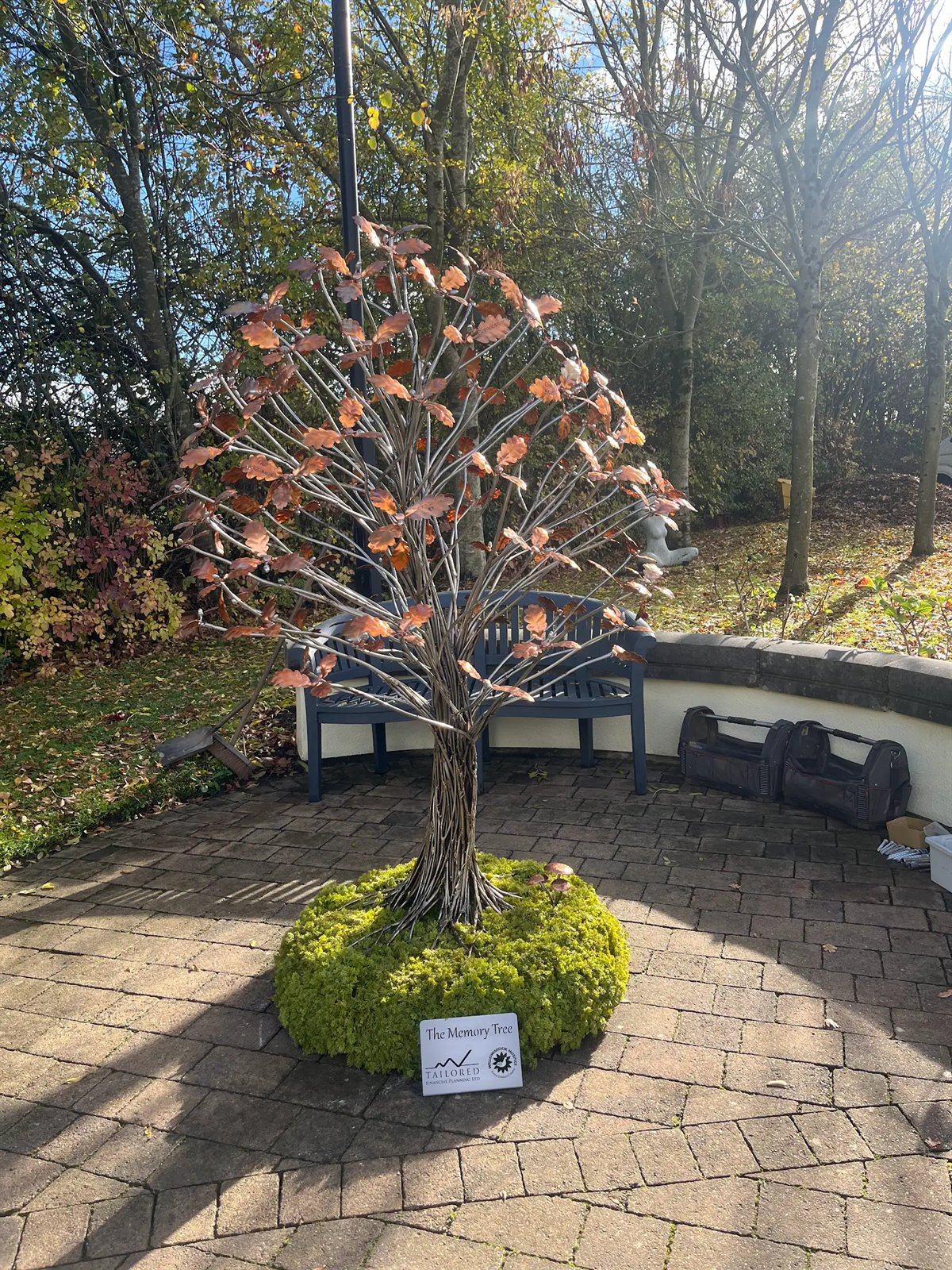
Willowbrook Hospice
1.80 m, out in the grounds with seating round it. Standing since July 2025, and added to ever since.
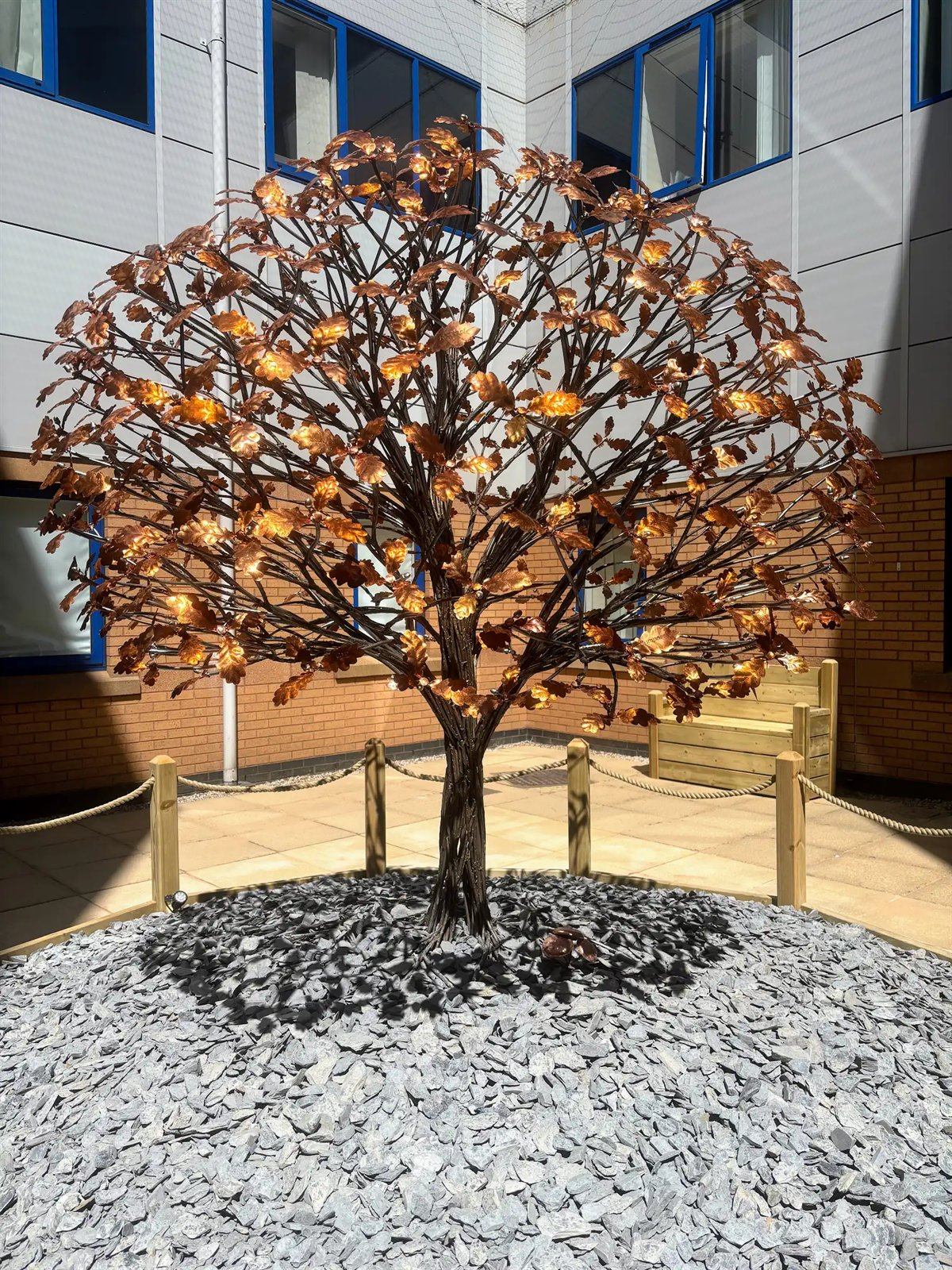
BabyBeat Garden, Royal Preston
In the maternity unit courtyard, where the staff call it a calming place of reflection and wellbeing. A special place, and that is all it needs to be.
A leaf is the part that goes. The tree is the part that stays.
Nobody designed that as a metaphor. It is just what a tree does, and every culture that ever looked at one worked it out on its own.
Ours is the version where the leaf does not go. It is cut from copper, it carries a name, and it stays on the branch through every winter there is. The tree keeps growing anyway, because a new leaf goes on it every time somebody asks — which is a strange thing for a tree made of steel to do, and it is the whole reason we make them.
And then it gets passed on
The trees are the visible part. Underneath them is the thing FORJD is actually for, which is that these skills do not survive unless somebody is taught them — raising, annealing, planishing, seaming, hot riveting, and a dozen more that are on nobody's syllabus.
Every tree that goes up is a reason to teach another person how to make the next one. The forge gets passed on, never sold.
Families come and make a leaf of their own in the workshop, too. That is not a service anybody invented and it is not on a list. People asked.
The craft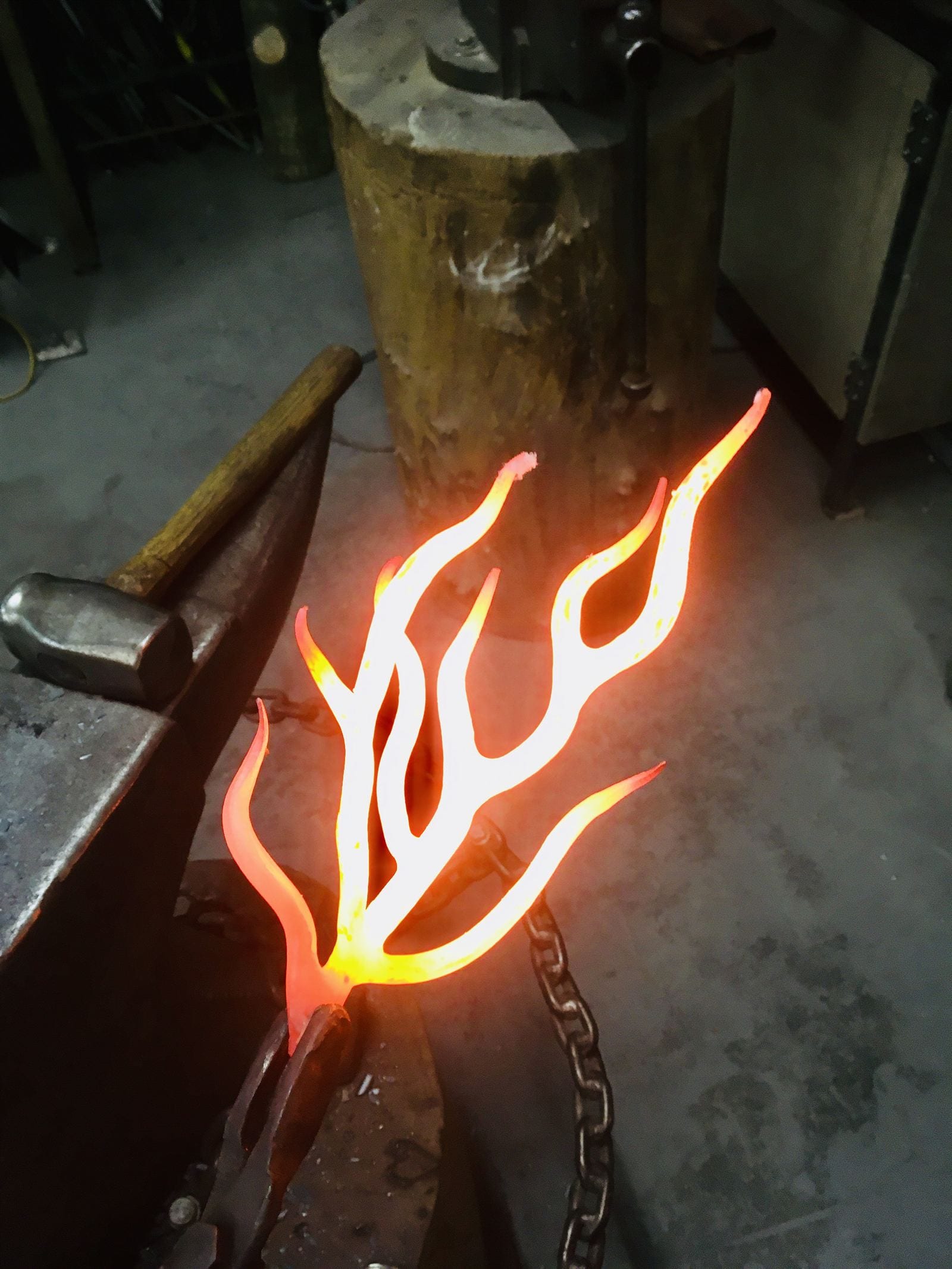
Tell us about the place
If your garden or your courtyard has somewhere for one, we will survey it properly — measured, photographed, and the tree drawn standing on your own ground at true size, before anybody commits to anything.
Talk to us about a tree